Source carved cedar wood block for crafts, decor, and building
Compare 30 listings for carved cedar wood block options suitable for crafts, home decor, and building projects. Buyers can evaluate specifications like material, size, and customization availability across multiple suppliers.
Key considerations
Products List







Comprehensive Sourcing Guide
Strategic Sourcing Guide for Carved Cedar Wood Blocks
Understanding Product Definitions and Material Variations
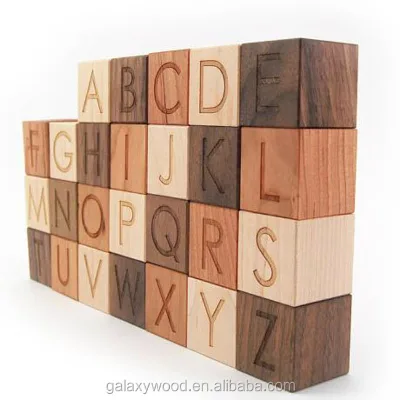
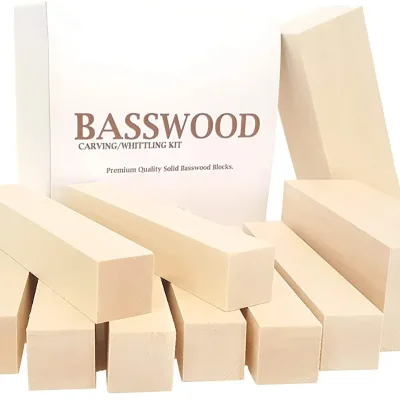
When initiating a procurement search for carved cedar wood blocks, buyers must first distinguish between the specific material requested and the broader categories of wooden products often listed in global marketplaces. The core keyword "carved cedar wood block" implies a specific species of wood (Cedar) and a specific manufacturing process (Carving). However, an analysis of available product data reveals a complex landscape where "wooden blocks" are frequently categorized by generic attributes rather than specific species. For instance, many listings describe products simply as "Wood" or "Oak" and "Poplar" without explicitly confirming Cedar content. In the observed market data, products are often defined by their function, such as "Decoration," "wooden building blocks," or "custom wooden blocks," rather than by their botanical origin.
Buyers must be vigilant when reviewing product specifications. The presence of terms like "Solid" board core structure or "3-Layer" construction suggests that some products may be engineered wood rather than solid cedar. For example, data indicates products with a "Poplar" core and "Oak" surface material, which are distinct from a solid cedar block. Furthermore, the "Technique" attribute varies significantly; while some products are listed as "Polished," others are described as "Without Decoration" or "Finished." This distinction is critical because a "carved" block requires specific machining capabilities that differ from standard polishing or simple cutting. Buyers should verify that the "Product Type" explicitly matches the intended use, whether it is for "crafts," "indoor" decoration, or "outdoor" applications, as the material durability requirements will differ.
Technical Specifications and Dimensional Standards
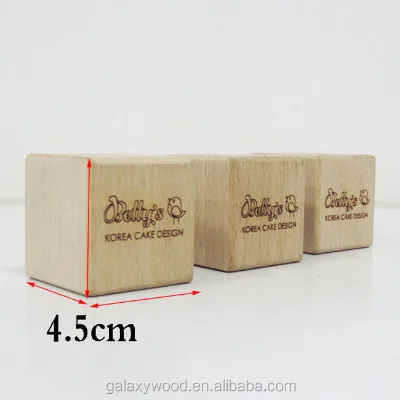
The technical specifications for wooden blocks vary widely depending on the intended application, ranging from small decorative items to large structural components. In the current market, standard dimensions often align with industrial sheet goods, such as 1220x2440mm or 1250x2500mm, which are typically used for larger panels rather than individual blocks. However, for specific block applications, the "Size" attribute can be customized, with observed models ranging from small units to larger assemblies like 1220244018mm. The "Shape" is frequently listed as "Square," but custom geometries are often available under "Customization: Available" attributes.
Material composition is a primary technical driver. While the search term specifies "Cedar," the available data highlights a prevalence of "MDF / Semi-hardboards" and "Wood Fiber" materials. These engineered products offer consistency and cost advantages but lack the natural grain and aromatic properties of solid cedar. The "Board Core Structure" is another vital specification; some products feature a "Solid" core, while others utilize a "3-Layer Structure Boards" configuration. The "Layers" attribute is particularly important for stability; a 3-layer structure often provides better resistance to warping compared to single-layer solid wood, especially in environments with fluctuating humidity. Buyers must cross-reference the "Surface Material" (e.g., Oak, Poplar) with the core material to ensure the final product meets the aesthetic and structural requirements of the project.
Compliance, Certification, and Environmental Standards
Environmental compliance and safety certifications are non-negotiable for modern B2B procurement, particularly when dealing with wood products intended for indoor use or export markets. The formaldehyde emission standards are a critical area of verification. Observed data points to "EGrade:First-Class" and "EMaterial:Wood Fiber" as specific compliance markers. Buyers should explicitly request documentation confirming that the formaldehyde emissions meet the required E1 or E0 standards, depending on the destination market's regulations. The presence of "CE" and "ISO" certifications in the product data indicates that certain suppliers adhere to European safety and quality management systems, but these should be verified against the specific batch of goods.
Forest stewardship is another key consideration. While "FSC" (Forest Stewardship Council) is a widely recognized standard for sustainable forestry, the provided data lists it with low confidence. Therefore, buyers should not assume FSC certification is present without explicit proof from the supplier. Instead, the verification process should include requesting valid FSC chain-of-custody certificates. Additionally, the "CARB" (California Air Resources Board) certification is noted in the data, which is essential for products entering the California market. The "Certification" field often lists multiple standards such as "CE, ISO, CARB, FSC," but the buyer must confirm that the specific product model, such as "GW-128" or "HC252," carries these certifications. Without explicit confirmation, the risk of non-compliance remains high, potentially leading to customs delays or market rejection.
Cost Drivers and Minimum Order Quantity Dynamics
The pricing structure for carved cedar wood blocks is influenced by several dynamic factors, including material scarcity, processing complexity, and order volume. The observed price range in the market spans from $0.16 to $490 USD, a variance that reflects the difference between simple, mass-produced blocks and high-end, custom-carved items. The "Selling Units" attribute often indicates "Single item" for small orders, but bulk pricing is typically negotiated based on the "MOQ" (Minimum Order Quantity). The data shows a wide MOQ range, from 1 piece to 1000 pieces, with specific high-confidence observations of 500pcs and 1000pcs.
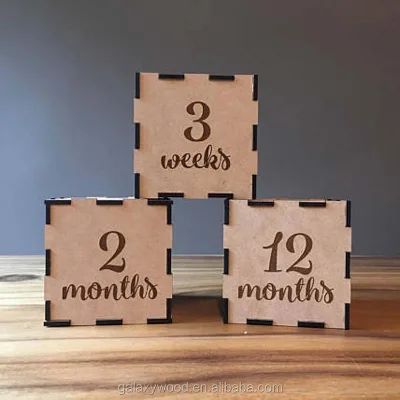
Suppliers with higher "Supply Ability," such as 3,000,000 pieces per month or 100,000 pieces per month, may offer more competitive pricing due to economies of scale. However, the "Customization: Available" attribute often introduces a cost premium. Custom carving, specific dimensions, and unique surface finishes require additional labor and setup time, which increases the unit cost. The "Packaging Details," such as "Carton Packing" or "Standard Exporting Pallets," also impact the final landed cost. Buyers should be aware that "Safety Packaging" is often included in the price for fragile or high-value items, but this should be confirmed in the commercial invoice. Understanding the relationship between the "Model Number" (e.g., GW-450, GW-810) and the associated cost is essential for budgeting, as different models may have vastly different material and processing requirements.
Supplier Evaluation and Geographic Considerations
Evaluating potential suppliers requires a careful assessment of their geographic location and logistical capabilities. The primary production hubs identified in the data are "Guangdong, China" and "Shouguang Shandong China." These regions are known for their extensive woodworking industries and supply chain infrastructure. The "Port of dispatch" is frequently listed as "Shenzhen," which is a major logistics hub for international shipping. Buyers should verify the supplier's actual location against the "Place of Origin" to ensure consistency and to assess the proximity to shipping ports, which can affect lead times and freight costs.
Supplier reliability is often indicated by their "Supply Ability" and "Production Process." A supplier claiming a monthly capacity of 3,000,000 pieces suggests a large-scale operation, but buyers must verify if this capacity applies to the specific "Carved Cedar" product or if it refers to generic wooden blocks. The "Production Process" is listed as "Dry-Proces," which is standard for ensuring wood stability, but buyers should inquire about the specific drying methods used to prevent future warping. Furthermore, the "Finish" attribute, ranging from "Without Decoration" to "Finished," indicates the level of processing the supplier can perform in-house. A supplier offering "Surface Finishing: Finished" services may provide a more turnkey solution, reducing the need for secondary processing by the buyer.
Quality Control and Inspection Protocols
Implementing a robust quality control (QC) protocol is essential when sourcing carved wooden blocks, as natural materials are prone to variability. The "Feature" attribute, such as "Waterproof," is a critical performance claim that must be validated. While some products are marketed as waterproof, this is often achieved through chemical treatments or specific surface coatings rather than the inherent properties of the wood. Buyers should request test reports or certificates of analysis to verify the effectiveness of these treatments, especially for products intended for "Outdoor" usage, as the data indicates some blocks are suitable for both "Indoor" and "Outdoor" applications.
Visual inspection is another vital component of QC. The "Technique" of "Polishing" and the "Surface Finishing" status should be checked against the sample. Defects such as cracks, knots, or uneven carving can significantly impact the product's value. The "Shape" and "Size" tolerances must be strictly controlled; for instance, a block specified as "Square" with dimensions of 1220244018mm must meet these exact measurements. The "Layers" and "Board Core Structure" should also be inspected to ensure they match the specification, particularly for engineered wood products where delamination or core voids can occur. Buyers should establish a clear acceptance criteria document that includes visual standards, dimensional tolerances, and performance tests for water resistance and formaldehyde emissions.
Long-Term Procurement and Supply Chain Resilience
For long-term procurement, buyers must consider the sustainability of the supply chain and the potential for supply disruptions. The "Customization" capability of suppliers is a key factor in maintaining product uniqueness and competitive advantage. However, reliance on a single supplier for custom carved blocks can pose risks. Diversifying the supplier base across different regions, such as Guangdong and Shandong, can mitigate these risks. The "Lead Time" is not explicitly provided in the data, but it is a critical variable that buyers must negotiate. High-volume suppliers with large "Supply Ability" may have longer lead times for custom orders due to the complexity of the carving process.
Packaging and logistics also play a significant role in long-term success. The "Packaging Details" such as "Standard Exporting Pallets" and "Paper Carton or Board for Binding" must be sufficient to protect the carved blocks during transit. Damage during shipping can lead to significant financial losses and customer dissatisfaction. Buyers should ensure that the packaging is robust enough to handle the specific weight and fragility of the carved blocks. Additionally, the "Usage" of the product, whether for "Indoor" or "Outdoor" applications, dictates the required durability and maintenance. Long-term contracts should include clauses for regular quality audits and the ability to adjust order volumes based on market demand, ensuring a flexible and resilient supply chain.
FAQs
What certifications are available for wooden blocks?
Some products carry CE, ISO, CARB, and FSC certifications. Buyers must verify specific model numbers like GW-128 or HC252 to confirm these standards apply to the batch.
How can I find custom carved wooden blocks?
Customization is available for certain wooden block models. Suppliers offer tailored dimensions and finishes, but this often requires higher minimum order quantities and specific lead times.
Which material types are used for these blocks?
Materials include solid wood, MDF, and engineered boards with Oak or Poplar cores. Specifications vary from 3-layer structures to solid cores depending on the product model.
Can I order small quantities of wooden blocks?
Minimum order quantities range from 1 to 1000 pieces depending on the supplier. Specific high-confidence listings show MOQs of 500 or 1000 pieces for standard models.
What are the standard dimensions for wood blocks?
Standard sizes often align with industrial sheets like 1220x2440mm. Custom sizes such as 1220*2440*18mm are also available for specific block applications.
Where are these wooden blocks manufactured?
Primary origins include Guangdong and Shouguang Shandong in China. Products are typically dispatched from major ports like Shenzhen for international shipping.